Showing posts with label vehicles. Show all posts

Monday, March 1, 2010

Concept Car : Renault Peugeot Citroen C Zero 2010

A concept already seen! look as Mitsubishi i-MiEV. Citroen has just adapted the car to house style, as Peugeot with the ion.


PSA (Peugeot-Citroen), the politics of electric vehicles is to partner with specialists. Thus, after the Berlingo First Electric, developed with Venturi Automobiles, the Group has approached Mitsubishi Motors Corporation, to develop the C-Zero. This strategy shows some caution on the part of PSA, in contrast to gamble in terms of investment, offers an electric Renault. The group prefers the hybrid, less revolutionary. Question of culture!


Technically, the C-ZERO has a synchronous motor with permanent magnet delivers 47 kilowatts (64ch) between 3000 and 6000 rpm. The maximum torque of 180 Nm is constant from 0 to 2000 rpm. The fall of torque from 2000 rpm is needed is the technical defluxing, familiar to electricians. The motor power is provided by batteries last generation of Lithium-ion implanted in the center of the vehicle in the floor. The stored energy is 16kWh issued a voltage of 330V.


Performance side, there is only one number to remember: 130. The car can travel 130 km on a single charge and maximum speed reaches 130 km / h. A city with a capacity of peri-urban. Know that in France, 70% of car trips daily on weekdays, are less than 30 km, for an overall average of 40 km.


As the ion Peugeot, the C-Zero will be marketed in 2010 and will be eligible for bonuses Government 5 000 �. Why miss out?

Thursday, January 28, 2010

Concept car : Hurst Silver and Black Series 4 Challenger 2010

Hurst Performance Vehicles unveiled the first-ever Series 4 Supercharged 2010 Hurst/Hemi Challenger, dressed in the signature silver and black Hurst colors at the �Back to the Bricks� celebration in Flint, Mich
The numbered silver and black Challengers come equipped with a wild red anodized HARD-DRIVE� pistol grip Hurst shifter and 20? one-piece polished aluminum Hurst forged wheels, featuring graphite gray painted spoke insets and red and black Hurst logo wheel centers. Hurst collaborated with Katzkin on the car�s black leather interior, which features perforated red inserts, red top-stitching and logos. Each Challenger contains traditional Hurst red and black logos in the dash badge, grille badge, wheel centers, fender graphics and the embroidered floor mats.
The Performance Series cars are a limited numbered series. Each comes with a sequentially numbered dash badge and its own Certificate of Authenticity. These cars all feature Hurst�s own AIR-SPEED� rear deck spoiler painted in body colors, Hurst/Eibach suspension, shocks and sway bars, Hurst/Magnaflow polished stainless steel cat-back exhaust, BF Goodrich KDW Performance Tires, Hurst/Katzkin leather interior, embroidered logo floor mats, a custom car cover and K&N Air Filters. Hurst cars feature painted stripes and graphics under clear, not stickers. SERIES 3 through 5 feature HURST/Vortech superchargers.


The HURST/Hemi�-Challenger is available in five performance stages. Series 2 vehicles are available through participating Dodge dealers nationwide, while Series 3, 4 and 5 vehicles are only available from Hurst Performance Vehicles and can be ordered via the company�s website at www.hurst-performance.com


Sunday, September 13, 2009

Concept Car :Chevy Volt 2010


Genius in theory. In reality? We might know by 2010.

For decades, American automakers, Washington politicos, oil companies and consumers alike have been caught up in the lure of cheap gasoline. It�s led to fuel inefficient vehicles, lax legislation, and even more lax energy innovation. But in the end, the root of all these behaviors comes back to the American consumer. The American consumer has always wanted and purchased gasoline-powered products, so that�s what the market delivers. But like repeatedly putting one�s hand on a burning stove, at what point do American consumers conclude the financial pain at the pump has gotten too great? And when do their automobile choices start changing the behavior of automakers, politicians and oil companies? The Hybrid craze is the first step in this new direction. Although Hybrids get a lot of well-deserved grief from some industry experts, there is one undeniable merit to them - Hybrid popularity is producing more alternatively-powered choices for American consumers.

full story

Monday, March 30, 2009

Ferrari Challenge Stradale

Ferrari Challenge Stradale, car, automobile

The Ferrari Challenge Stradale is a variation of the Ferrari 360 Modena.
When the car was created, the designers were thinking 20% track use in mind and 80% road use.
And it shows in the performance.
The Challenge Stradale's 90� F131 V8 engine only puts out about 25 more horses (425) than the Modena, but the car is lighter, giving it a superior power to weight ratio.
It has a 0 to 62 mph time of just 4.1 seconds with a top speed of 183 mph.
(Although the 2008 version is said to pull 0-60 in 3.9 seconds)
The Stradale can pull the quarter mile in about 12.5 seconds at 114.1 mph.

Sunday, March 22, 2009

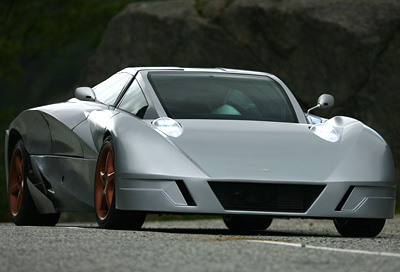
Concept Car: Aetek FYK

Make Aetek
Model FYK
Concept year 2006
Production year -
Engine natural/hydrogen gas

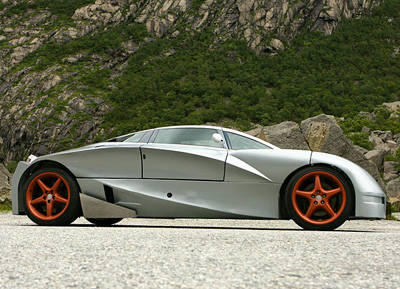
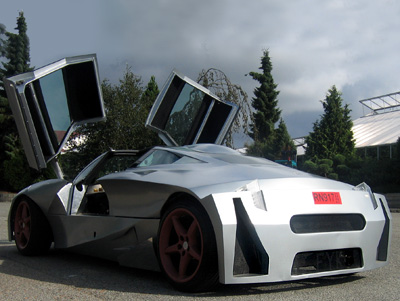
The FYK concept car was developed by Norwegian company Aetek, in conjunction with and sponsored by Statoil. The FYK was designed to highlight natural and hydrogen gas powered environmentally friendly vehicles.

Statoil provide the fuel for the FYK concept car. They see the natural and hydrogen gas mixture called NaturalHy (HCNG) which consists of 8-20% hydrogen, 92-80% compressed natural gas to be a commercially viable step towards a future potential all-hydrogen market.

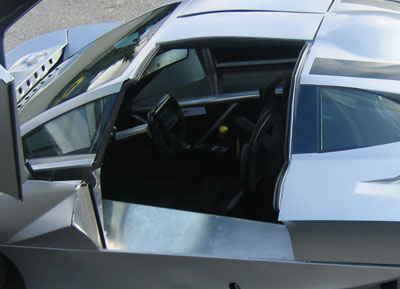
The FYK concept car is built almost entirely from recyclable aluminium including body, chassis, wheels, engine and even interior elements. Exterior and interior design of the FYK concept show different aluminium shaping techniques and surface treatments.


Wednesday, October 15, 2008

The Jaguar XF

Jaguar XF, cars, automobile

The Jaguar XF was launched in the UK in 2008.
It is a mid-size luxury car / sports sedan made by Jaguar, designed to replace the S-Type.
The Jaguar XF won the What Car? (a long-running UK monthly automobile magazine and website) Car of the Year award and the Car of the Year 2008 from What Diesel? magazine.

The base model of the Jaguar XF carries the 3-litre V6 (adapted from the Ford Duratec V6). It also comes with the Jaguar AJ-V8 4.2-litre engine.The standard version produces 300 hp but the supercharged SV8 model produces a very respectable 420 bhp!

Tuesday, September 30, 2008

The Jaguar S-Type

jaguar s type, jaguar, jaguars, cars, classic cars

The Jaguar S-Type saloon was built by British car manufacturer Jaguar. It was announced in 1963, but actual deliveries didn't begin till 1964.
The S-Type came with the 3.4 or 3.8 L I6 Jaguar XK engine.
Slower and heavier than the Jaguar Mark 2, The S-Type had a better ride.
In the United States, the only engine offered was the 3.8 L engine, until the larger 4.2 L engine was introduced in the Jaguar 420.
The S-Type was replaced in August 1968 with the release of the larger Jaguar XJ6, but the name was brought back in 2000 for the retro-styled mid-range Jaguar S-Type.

Really nice page on the Jaguar 3.8 S-Type:
http://www.webfocus.co.nz/jaguar/

Monday, September 22, 2008

The Jaguar Mark 2


The Jaguar Mark 2, also known as Mk2, Mk 2 or MkII, is a medium sized saloon (sedan) car built during the 1950s and 1960s by Jaguar.
Rated at over over 200 bhp and with a top speed of about 125 mph, these sedans were often used as police patrol cars. But on the flip side, they were often used as getaway cars by bank robbers.
The Mark 2 was eventually replaced by the XJ6.

Tuesday, September 16, 2008

The Jaguar Mark 1

Image Hosted by ImageShack.us

The Jaguar Mark 1 was a saloon car (sedan) produced by Jaguar between the years 1955 and 1959.

Originally known as the 2.4 and 3.4 'Compact' saloons, they have come to be called "Mark 1" to fit with their more famous successor, the Mark 2. They were the company's first "small" saloon since the demise of its 1� Litre cars in 1949 and were an immediate success, easily outselling the larger Jaguar saloons.

A 2.4 litre saloon with overdrive was tested by the British magazine The Motor in 1956. It was found to have a top speed of 101.5 mph and could accelerate from 0-60 mph (97 km/h) in 14.4 seconds. Not exactly burning up the road compared to other Jags. A fuel consumption of 18.25 miles per imperial gallon (15.20 mpg US) was recorded. The test car cost �1532 including taxes.

They went on to test a 3.4 litre automatic saloon in 1957. This car had a top speed of 119.8 mph (192.8 km/h), acceleration from 0-60 mph (97 km/h) in 11.2 seconds and a fuel consumption of 21.1 miles per imperial gallon (17.6 mpg US) was recorded. The test car cost �1864 including taxes of �622.


Technorati Tags:

Tuesday, September 9, 2008

Live Out Loud teams up with Jaguar

Live Out Loud teams up with Jaguar

Live Out Loud magazine has done it again! Pairing up with one of the most respected classic cars, Jaguar, Live Out Loud burst onto the scene this past Sunday and took over the Nelson Mandela Square in Sandton.
Curiosity of passers-by was more than piqued with the impressive sight of 50 vintage cars that were on display, thanks to The Jaguar Club. The club was there to give people a chance to look under the hood and get up-close-and-personal with some of the most beautiful classic cars in the world. Live Out Loud staff were there to explain more about the brand and hold one of our biggest subscriber drives to date. Over 2 000 people stopped to find out more about Live Out Loud and to check out the Jags.
http://www.bizcommunity.com/Article/196/39/28178.html

Friday, September 5, 2008

The Jaguar Mark IV

Image Hosted by ImageShack.us

The Jaguar Mark IV, pronounced mark four, was a saloon (sedan) car built by Jaguar from 1945 to 1949.
It was a relaunch of a pre World War II model made by SS Cars Ltd from 1936.

Before World War 2 the name Jaguar was the model name given to the complete range of cars built by SS Cars Ltd. The saloons were titled SS Jaguar 1� litre, 2� litre or 3� litre. The two seater sports car was titled the SS Jaguar 100 2� litre or 3� litre.

After the war the company name was changed to Jaguar Cars Ltd. While the post war saloons were officially the Jaguar 1� litre, 2� litre and the 3� Litre, the term 'Mark IV' was applied by the trade simply to seperate them from the officially named Mark V.

http://www.saloondata.com/ is an online site that keeps track of all the Classic Jaguar Saloon's still around.

You can also get a ton of info on the early Jags here:
http://www.jag-lovers.org/firstcats/mkiv.php3

Saturday, August 30, 2008

Jaguar recalls some XFs for faulty seat belts

Jaguar XF, cars, automobile, automobiles, car, aut

Jaguar recalls some XFs for faulty seat belts

If you have a 2009 Jaguar XF, you should hop down to your dealer to have the rear safety belt assembly looked at. Jaguar is recalling 7,900 of the '09 cars because in an accident the rear occupants might not be properly restrained.
http://www.autoblog.com/2008/08/29/jaguar-recalls-some-xfs-for-faulty-seat-belts/

Now would this have happened when Jaguar was still British owned?

Friday, August 29, 2008

Jaguar XK60

Jaguar, XK60, cars, automobile, automobiles, car,

To celebrate the 60th anniversary of the launch of the XK120, Jaguar is launching a special series of the current XK for the UK market � the aptly named XK60.
XK60s will be built from July 2008 and include 20-inch Senta alloy wheels, a sporty alloy gear knob and selector-gate surround, plus distinctive body enhancements: a new front spoiler and rear valance panel, chrome-finished side vents and bright upper and lower front grille meshes, special tailpipe finishers and appliqu�s on both sides of the car.

Thursday, August 21, 2008

The Jaguar XK

Image Hosted by ImageShack.us

The Jaguar XK series (XK8 and XKR) is a grand tourer produced by British carmaker Jaguar since 1996. The car was introduced in Geneva Motor Show on March 5th 1996. It is the replacement of the XJS, and is available as a coup� and convertible. Currently in its second generation, the XK8 was the first 8 cylinder vehicle produced by Jaguar, when the Jaguar AJ-V8 engine was introduced.
The 1997 XK8 (project code X100) was available in coup� or convertible body styles and with either a supercharged 370 hp (276 kW) or naturally aspirated 290 hp (216 kW) engine. The supercharged variant is known as the XKR. The first-generation XK series shares its platform with the Aston Martin DB7. Both cars are derived from the Jaguar XJS, though the platform has been extensively changed.

Thursday, July 10, 2008

Jaguar XJ-S


The Jaguar XJ-S, later the Jaguar XJS, was a luxury grand tourer produced by Jaguar. The XJ-S replaced the legendary E-Type (or XK-E) in September 1975, and was based on the XJ saloon. It was developed as the XK-F, though it was very different in character from its predecessor. Although it never had quite the same sporting image, the XJ-S was a competent grand tourer, and more aerodynamic than the E-Type. The last XJS was produced on April 4, 1996, with the XK8 taking its place.

First, the XJ-S appeared in 1975 as a 1976 model. Power came from the Jaguar V-12 with a choice of a manual or automatic transmission, but the manual was soon dropped. V-12 automobiles were unusual at the time, with notable others coming from Italian luxury sports car makers Lamborghini and Ferrari. The specifications of the XJ-S compared well with both Italian cars; it was able to accelerate to 60 mph (97 km/h) in 8.9 seconds and reach 142 mph (229 km/h). The first series of XJ-S cars had a Borg-Warner Model 12 transmission with a cast iron case and a bolt-on bell-housing. In 1979 GM Turbo-Hydromatic 400 transmissions were fitted. The TH400 transmission was an all aluminum alloy case with an integrated non-detachable bell-housing.

Jaguar's timing was not good; the car was launched in the wake of a fuel crisis, and the market for a 5.3-litre V12 grand tourer was very small. The styling was also the subject of criticism, including the "flying buttresses" behind the windows.

Jaguar seized promotional opportunities with the television series The New Avengers and Return of the Saint. The New Avengers featured Mike Gambit (Gareth Hunt) who drove an XJ-S. Reliability issues meant that three XJ-S cars were used. Return of the Saint saw Simon Templar (played by Ian Ogilvy) driving an early XJ-S with the number plate "ST 1". Miniature versions were made by Corgi and proved popular. A decade and a half before, Jaguar had turned down the producers of the earlier Saint series when approached about the E-type; the producers had instead used a Volvo P1800.

Responding to criticisms that the XJ-S was not a worthy E-type successor, Pininfarina revealed a sporty show car in 1978 based on XJ-S mechanicals and called Jaguar XJSpider. The car never went into production.

Thursday, September 6, 2007

The Porsche Cayman

Image Hosted by ImageShack.us

The Porsche Cayman is a mid-engined 2-seat sports car produced by Porsche AG of Germany. First launched in the 2006 model year, the Cayman is the coup� version of the second generation Porsche Boxster convertible. Like the Boxster, the Cayman is assembled in Finland by Valmet Automotive.

The performance of the Cayman S approaches that of Porsche's flagship sports car, the 911 Carrera. Rally legend Walter R�hrl lapped the N�rburgring Nordschleife track in a Cayman S equipped with optional 19" wheels, PCCB, and PASM in a time of 8 minutes, 11 seconds. The time for a standard Cayman S, as published by the manufacturer, was 8 minutes, 20 seconds. In contrast, R�hrl recorded 8 minutes, 15 seconds in a 911 Carrera. The similarity in performance between the two cars has led to speculation about whether the Cayman S will cannibalize sales of the Carrera, as the basic Carrera's recommended retail price in the United States is $12,400 higher than that of the Cayman S.

A Cayman prepared and run by privateers J�rgen and Uwe Alzen finished fourth overall (of 220 entrants) in the 2007 running of the N�rburgring 24 Hour race, ahead of two flagship Porsche 997 GT3 RSR's, a 997 GT3 Cup, and a 996 GT3 Cup. Another two privateer Caymans, entered by CSR and MSpeed, finished 22nd and 117th overall, respectively. Porsche disclaims support for the Cayman teams, while supporting some or all of the 997 teams.

A performance car feature which is not available from Porsche for the Cayman is limited slip differential (LSD). Some commentators have speculated that LSD is not offered, even as an option, because the Cayman S's performance would then be too close to the 911 Carrera. Several tuning companies offer Cayman buyers the ability to retrofit a LSD.


Technorati Tags: